
Share this
by Jon Ferraez on Mar 6, 2015, 8:20:14 AM
When it comes to restoring files from a virtual machine, 80% of the typical recovery cases that we see only require a single file to be restored from a backup. Given that reality, why waste your time and effort restoring an entire virtual machine, when you can do a file-level restore and just recover the individual files that you need. When time is money and resources are short, it only makes sense to save time when and where you can.
 Single file restore from a VMware backup is possible.
With NovaBACKUP Business Essentials, restoring a single file from a backup of a VMware machine can be accomplished in just a couple of steps. This guide will walk you through a VMware backup process showing you step-by-step instructions on how to restore individual files or folders from a VMware VM backup utilizing NovaBACKUP’s Virtual Dashboard feature.
How to Create Your VMware Backup?
Before we get started, you will need to create a backup job for your VMware virtual machine from within NovaBACKUP’s Virtual Dashboard (available within NovaBACKUP Business Essentials) so that you have something to restore from. For instructions on how to create a VMware VM backup job, view this step-by-step guide in our Knowledge Base.
Restore a Single File from VMware Backup
STEP 1 - Launch the Virtual Dashboard
Once you have completed your backup, go to the NovaBACKUP home screen and click on the “Virtual Dashboard” as shown in the screenshot below.
STEP 2 - Select a Virtual Machine
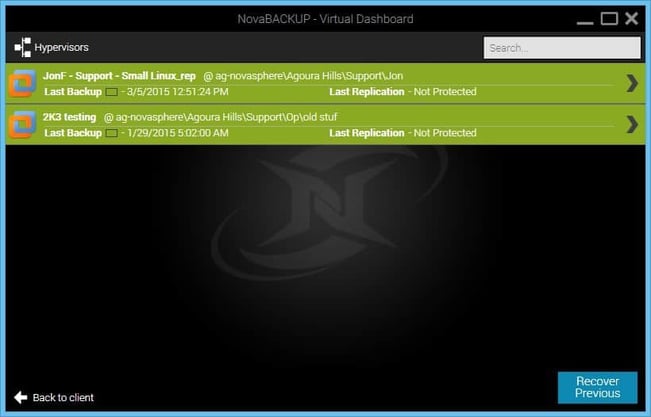
Once you have created at least one backup job for your VMware-based virtual machine, the Virtual Dashboard will display a list of the VMware Virtual Machines that you have created backup jobs for. Select one of the VMware-backup virtual machines from the Hypervisors list as shown in the screenshot below.
STEP 3 - Select a Backup to Mount
In order to restore a single file from a Virtual Machine backup, you will first need to be sure that the backup has been completed. If your backup has been completed, you will be able to select from the list of virtual machines that contain at lease one completed backup, whether that be a Full Backup or an Incremental/Differential Backup, and you will see a button labeled “Mount”. This is shown in the screenshot below.
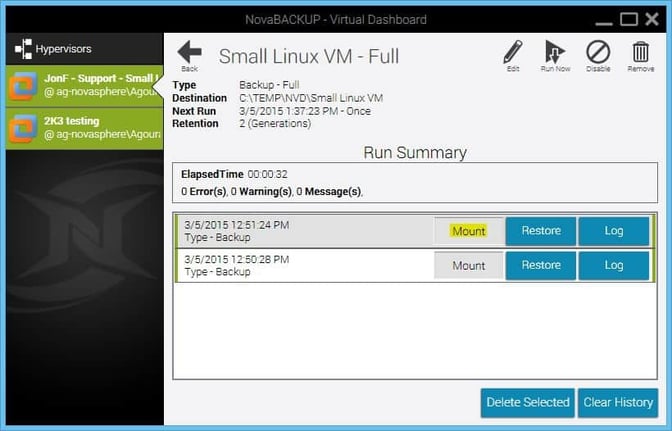
Clicking the “Mount” button will mount all of the volumes contained in the backup set to Virtual Drive(s) in Windows.
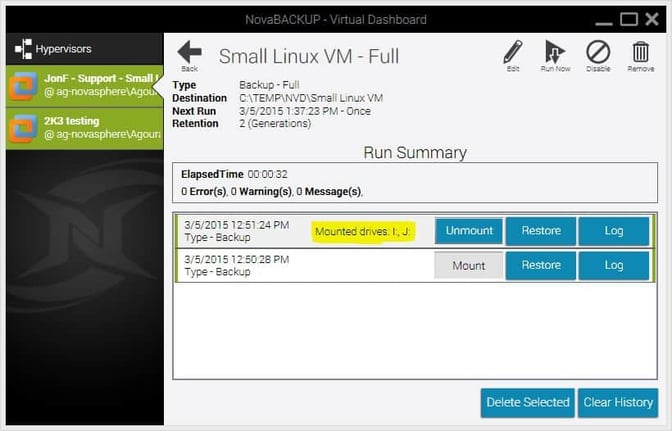
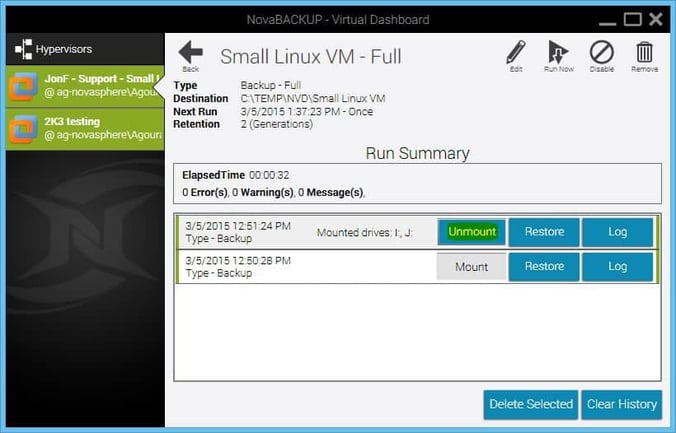
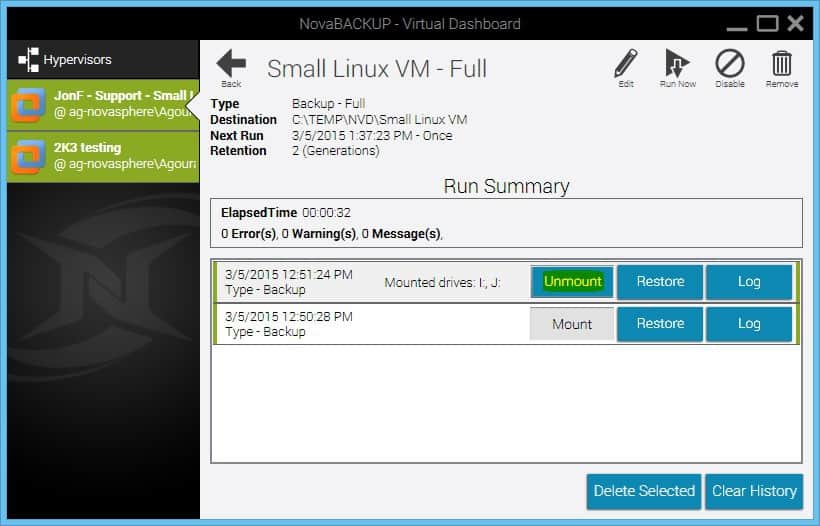
If the VMware backup that you are mounting contains two partitions/volumes as part of the backup, then the mount function will mount all of the volumes inside the backup to that number of drive letters for each volume and inform you which drive letters are assigned at the time of mounting the backup set. This is shown in the screenshot below.
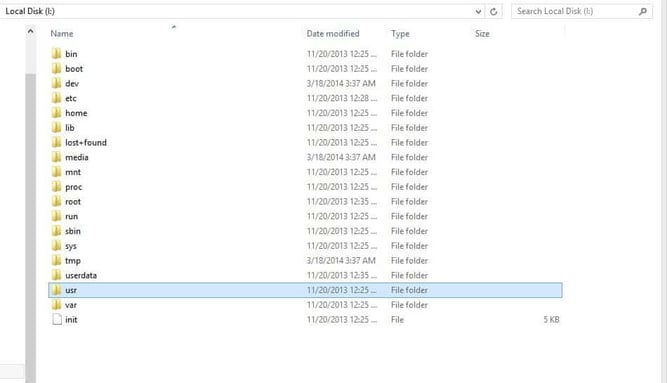
Here is an example of what the mounted volume (I: drive) looks like as seen when viewing the mounted volume in Windows Explorer. You can now restore files and folders simply by using Windows Explorer to copy files or folder(s) as needed from this and any other mounted volume(s).
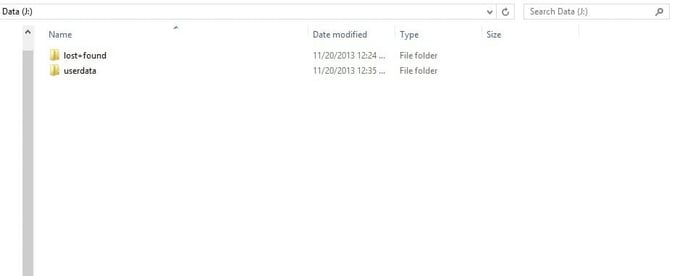
Here is the second mounted volume (J: drive) as seen when viewing the mounted volume in Windows Explorer.
STEP 4 - Select Your Files to Restore and Unmount Backup
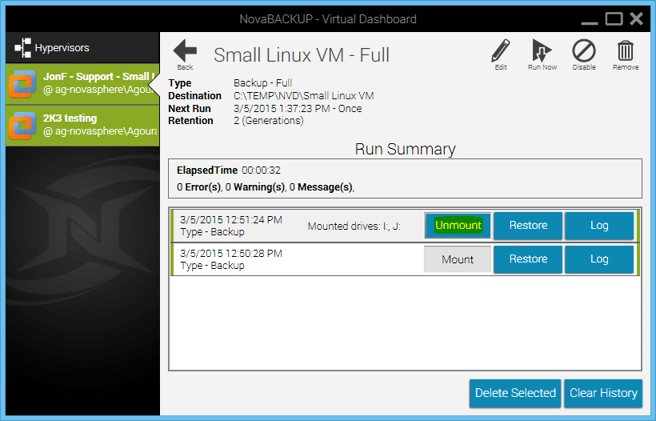
When you are finished restoring the single files that you need, you will want to unmount the currently mounted backup set to release the drive letters. To unmount all of the currently mounted volumes contained in this backup set, which we mounted earlier, you will just click the “Unmount” button. The Unmount function will release all of the mounted drive letters. This is shown in the screenshot below.


You're Done. This concludes the guide on how to restore a single file from a VMware backup of a virtual machine using NovaBACKUP.
Frequently Asked Questions
Does this single-file restore process work the same way for Hyper-V virtual machines, or is it VMware-specific?
This exact Virtual Dashboard mount-and-restore process is specific to VMware virtual machines. Hyper-V backups use a different restore workflow within NovaBACKUP. The underlying concept of mounting a backup to pull individual files is similar. Our guide on backing up a Hyper-V SQL Server covers the Hyper-V-specific setup and considerations.
Does mounting a VMware backup for file restore affect the performance of the live production VM?
No, mounting a backup for file restore works entirely from the backup copy itself, not the live virtual machine. The mount process creates virtual drives in Windows from the stored backup data. Your production VM keeps running normally throughout the restore. This makes single-file restores safe to perform during business hours without any risk to the live system.
What should I do if the Mount button does not appear or mounting the backup fails?
A missing Mount button usually means the backup job has not fully completed yet. Only completed backups appear as mountable in the Virtual Dashboard. When mounting fails after clicking the button, check whether another process is using the same drive letters NovaBACKUP needs. Restarting the NovaBACKUP service or the Virtual Dashboard itself resolves most remaining mount issues.
Worth Reading
5 Backup Security Checks MSPs Should Run Before Attackers Do

Multi-Location Clients Need a Different Backup Plan Than Single-Site Ones | Data Protection Digest | September 2026
Share this